Damian Keys & Doors Solutions Service Team
Local locksmith team
Sep 23, 2026 13 min read

If your Toronto home was built before 1960 — think the red-brick semis lining Roncesvalles, the detached Edwardians in the Annex, or the wartime bungalows tucked into East York — there is a real chance your front door is hiding a very different locking mechanism than what you find at any big-box hardware store today. Most homeowners only discover this when a key breaks, a lock fails, or they try to upgrade their security and nothing fits. Understanding whether your door uses a mortise lock or a cylindrical lock is not just trivia; it is the difference between a smooth upgrade and an expensive door modification you never planned for.
This guide breaks down both lock types in plain language, helps you figure out which one your door already has, and explains what your options are when it is time to repair, replace, or modernize. Whether you are dealing with a 1920s pocket door or a solid-core exterior entry on a postwar duplex, the information below will help you have a confident conversation with a locksmith — and make a smarter decision for your home.
## What Is a Mortise Lock and Why Do Older Homes Have Them?
A mortise lock is a lock mechanism that is set into a deep rectangular pocket — the mortise — carved directly into the edge of a door. Instead of a single cylindrical hole bored through the door face, the mortise lock sits inside the door body itself. The visible hardware on the face of the door (the handles, the escutcheon plate, the deadbolt thumb-turn) is largely decorative trim covering the internal box. This internal box is the real lock: it contains the latchbolt, the deadbolt, and often an auxiliary lock function, all operated by a single key cylinder and a single set of levers. Mortise lock sets were the industry standard in North America from roughly the 1890s through the late 1950s, which is precisely why so many Toronto century homes still have them. Brands like Corbin Russwin and Baldwin built mortise lock hardware that was meant to last generations — and it often does, even if the internal parts eventually wear out.
The tradeoff is complexity. A mortise lock requires a skilled hand to service because removing it means sliding the entire internal box out of the door pocket, a process that involves set screws, spindle alignments, and often decades of paint layers sealing the escutcheon in place. If your door is original to the house and you have never had a locksmith look at it, there is a good chance the lock is serviceable but overdue. The most common issues are a worn cylinder that no longer grips the key cleanly, a fatigued latch spring that makes the door hard to close, or a deadbolt that has seized from years of humidity cycling through a wood door that expands and contracts with Toronto's seasons.
## Cylindrical Locks: The Modern Standard (and Why They Often Cannot Simply Replace a Mortise)
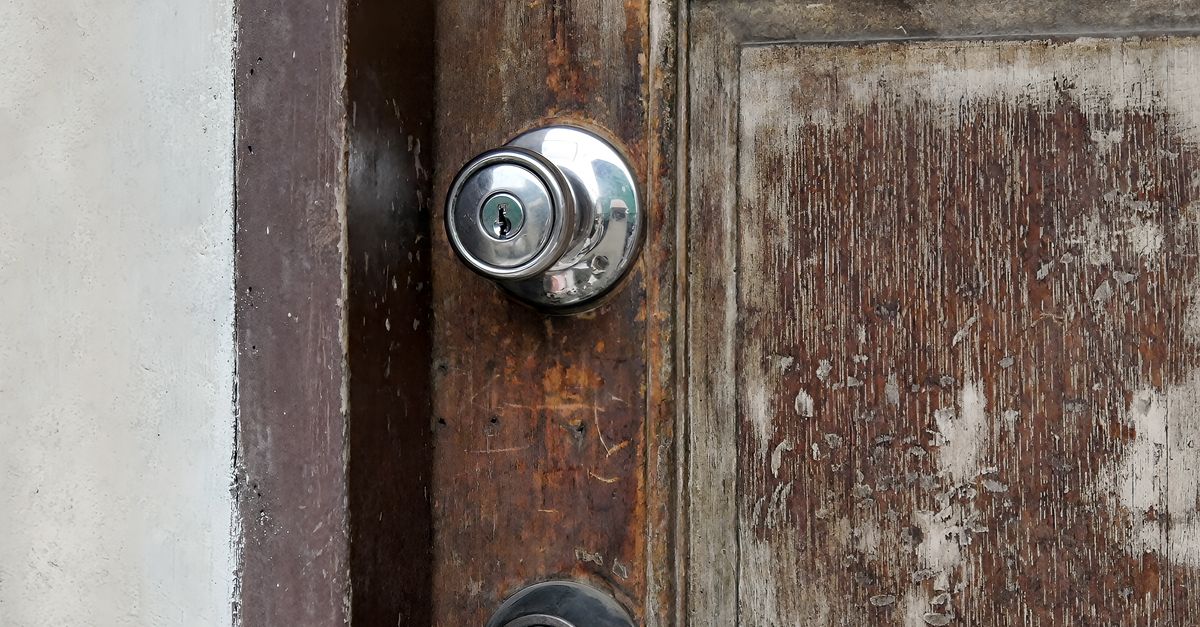
A cylindrical lock — sometimes called a bored lock or a tubular lock — is what most people picture when they think of a standard door knob lock or lever-handle lock. Installation requires two bored holes: a large cross-bore through the door face and a smaller latch bore through the door edge. The lock mechanism itself is inside the knob or lever, and a separate deadbolt is typically installed above it in its own bored hole. This is the system Schlage, Kwikset, and most contemporary hardware manufacturers design for, and it is by far the most common setup in homes built after 1960.
Here is the critical point that surprises many homeowners: you cannot simply swap a mortise lock for a cylindrical lock without significant carpentry work. The mortise pocket in a century-home door is a large, precise rectangular void. A cylindrical lock does not fill or cover that void. Attempting a direct swap leaves structural gaps in the door edge that compromise both security and door integrity. Conversely, if a previous owner already converted the door — plugging the old mortise pocket with a wood filler block and boring new cylindrical holes — a locksmith needs to know that before selecting replacement hardware, because the door's edge may have weakened sections that affect what anchoring hardware is appropriate. When you call us before assuming anything, we can assess the door in person and tell you exactly what the door can take.
## How to Tell Which Lock Type You Have Right Now
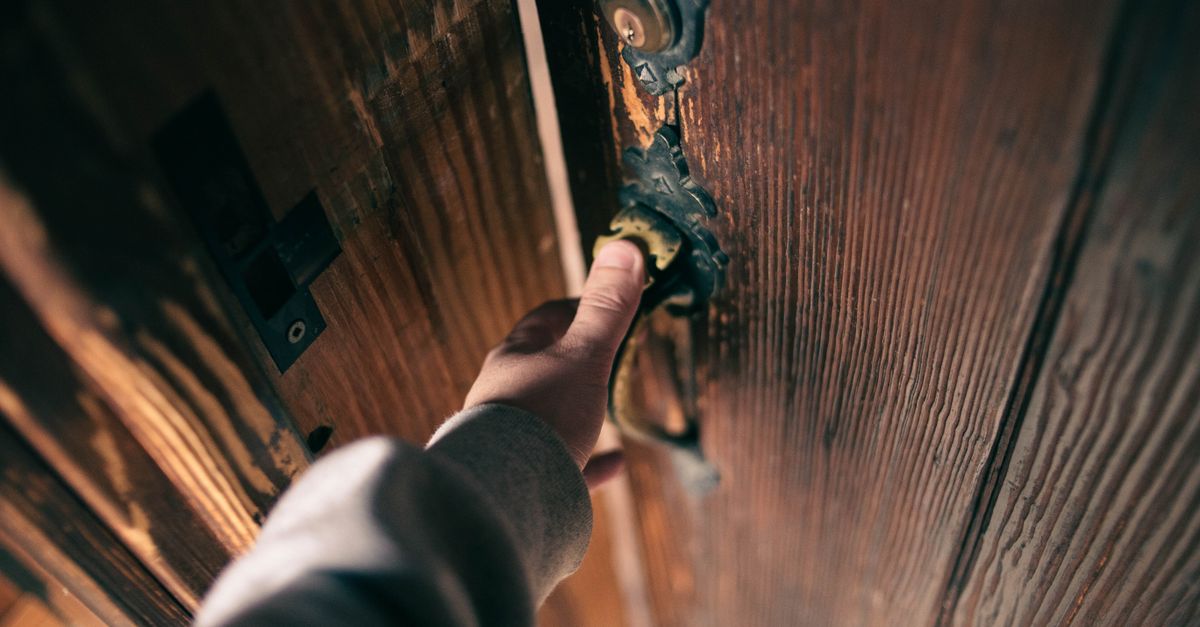
Stand at your front door and look at the edge of the door — the narrow strip of wood you see when the door is open. If you see a rectangular faceplate that is noticeably taller than it is wide (often three to five inches tall) and the latch and deadbolt emerge from the same faceplate, you almost certainly have a mortise lock set. Now look at the interior face of the door. A mortise system will have a single large escutcheon (backplate) running the height of the hardware, with the keyhole, thumb-turn, and handle all mounted on that one plate. The overall appearance is unified and intentional — it was designed as a single piece.
If instead you see a round knob or lever with a visible round rose plate against the door face, and a separate deadbolt installed above or below it with its own round rose, you have a cylindrical lock system. The door edge in this case will have a smaller, nearly square strike faceplate for the latch, and a second one for the deadbolt. A quick feel of the door edge is also telling: a mortise door will have a noticeably deep pocket behind that tall faceplate. If you are still unsure, take a photo of both the door face and the door edge and send it to a locksmith before ordering any hardware. Ordering the wrong mortise lock set exterior door hardware is a costly mistake that happens more than you might expect.
One more scenario worth knowing: some older Toronto doors have been converted over the decades in ways that are neither clean mortise nor clean cylindrical. You may find a mortise lock body with a modern cylindrical deadbolt bored above it, or a plugged mortise pocket that is only partially filled. These hybrid situations are exactly the kind of thing a trained locksmith needs to evaluate in person before any work begins.
## Mortise Lock Repair, Cylinder Upgrades, and Smart Options
For most century homes, the right answer is not replacement — it is restoration and upgrade. A well-made mortise lock body from the early twentieth century is often more durable than a modern cylindrical lock, provided the internal springs and the mortise lock cylinder are serviced or replaced. Replacing just the cylinder is one of the most common and cost-effective mortise lock services we perform. The new cylinder slots into the existing lock body, and you end up with a fresh, pick-resistant key profile without touching the door carpentry at all. If you are considering a Baldwin mortise lock or a Corbin Russwin mortise lock replacement for heritage hardware, we can source compatible mortise lock sets and hardware that match the original door prep.
Smart lock technology has also reached the mortise format. A smart mortise lock replaces the cylinder and sometimes the entire internal box with a motorized unit that accepts codes, fobs, or smartphone credentials — all while using the same door pocket. These are particularly useful for Toronto homeowners who rent out part of a century home or who want keyless entry without altering original millwork. The factors that shape the final price for any of this work — lock model, cylinder grade, whether parts need to be sourced, time of day, and travel distance to your address — are things we go over transparently before we start. We confirm an exact price upfront, so there are no surprises when the job is done. If your door lock is giving you trouble and you are not sure where to start, call us at (647) 692-2560 and we will talk it through with you before you commit to anything.
For homeowners managing rental properties or commercial storefronts in older Toronto buildings — along with our residential work, our commercial locksmith services cover master key systems, high-security lock upgrades, and access control that works within the constraints of heritage-designated buildings where door modifications are restricted. The approach is the same: assess what the door actually has, then recommend what genuinely fits.
## When an Emergency Locksmith Call Reveals a Bigger Lock Problem
A lockout is often the moment a homeowner discovers their mortise lock has been silently failing for months. The key starts feeling stiff, the latch does not retract smoothly, or the deadbolt requires a firm shoulder against the door to fully engage — and then one day the key just stops working entirely. This is especially common in Toronto's older housing stock after a winter like the ones the Junction, Parkdale, and Leslieville neighbourhoods see, where wood doors swell and then contract repeatedly, putting stress on lock components that may already be near the end of their service life.
When our emergency locksmith team arrives for a lockout, we always assess the lock condition as part of the call. We will tell you honestly if the cylinder simply needs replacing, if the full mortise lock body needs to come out and be rebuilt, or if the lock has reached a point where the most sensible path is a quality replacement that uses the same door prep. What we will not do is push a more expensive option than what the door actually needs. The goal is a door you can secure and use confidently — whether that means a restored antique lock, a new mortise lock set, or a modern cylindrical system on a door that has already been converted. Our team is available around the clock, every day of the year. Call (647) 692-2560 — we answer 24/7.
## A Quick Reference: Mortise vs. Cylindrical at a Glance
Door edge faceplate: Mortise locks have a tall rectangular faceplate (often 3–5 inches) with both latch and deadbolt on the same plate. Cylindrical locks have two small, nearly square faceplates — one for the latch, one for the deadbolt. Lock depth: Mortise requires a deep internal pocket (the mortise); cylindrical requires only two drilled holes. Visible face hardware: Mortise uses a single unified escutcheon plate. Cylindrical uses separate round rose plates for knob or lever and deadbolt. Era of use: Mortise was standard pre-1960 in Toronto and most of North America. Cylindrical became dominant post-1960. Replaceability: Mortise-to-cylindrical conversion requires carpentry. Like-for-like mortise replacement is straightforward with the right parts.
Serviceability: Mortise lock cylinders can be upgraded independently, making security improvements relatively simple. Smart lock compatibility: Smart mortise lock options exist that fit the original door pocket. Common heritage brands still serviced: Corbin Russwin mortise lock and Baldwin mortise lock hardware are repairable with sourced parts in many cases. If your door knob lock is a cylindrical type and you are happy with the system, the main decision is cylinder grade and deadbolt quality. If you have a mortise, know that servicing it correctly is a specialty — not every locksmith carries the right tooling or parts knowledge for antique lock bodies.
## Our Full Range of Locksmith Services
Damian Keys & Doors Solutions offers a comprehensive range of locksmith services across the Toronto area, including: residential lockout assistance, commercial lockout response, mortise lock repair and replacement, cylindrical lock installation and rekeying, mortise lock cylinder replacement, smart mortise lock installation, high-security deadbolt upgrades, master key system design and installation, door knob lock repair and replacement, panic bar and exit device installation, access control system setup for commercial properties, lock rekeying after a move or tenant change, broken key extraction (door and ignition), automotive lockout response, car key cutting and programming, transponder key replacement, key fob programming, lost key replacement for all vehicle makes, sliding door lock repair, patio door lock replacement, garage side door lock upgrades, mailbox lock replacement, storage unit lock changes, padlock installation and removal, intercom and buzzer-integrated lock servicing, and after-hours emergency locksmith response across greater Toronto. Whether your need is urgent or planned, we bring the right tools and parts to handle it in a single visit wherever possible.
Frequently asked questions
What is a mortise lock and how is it different from a regular door lock?+
A mortise lock is a lock mechanism installed inside a deep rectangular pocket cut into the edge of the door, rather than bored through the face. The entire latch, deadbolt, and operating mechanism live in one internal box. A standard cylindrical lock, by contrast, is installed through two drilled holes and mounts mostly within the knob or lever itself. Mortise locks were the North American standard until roughly the late 1950s, which is why you find them in most Toronto homes built before that era. They tend to be heavier and more mechanically complex, and they require a locksmith with specific experience to service correctly.
Can I replace a mortise lock with a modern smart lock?+
Yes, in many cases you can upgrade to a smart mortise lock without any carpentry work. Smart mortise lock units are designed to fit the same internal door pocket as a traditional mortise body, replacing the cylinder or the full mechanism with a motorized unit that accepts PIN codes, key fobs, or smartphone access. The key question is whether your existing mortise pocket dimensions match the new hardware — this is something a locksmith should confirm before you purchase anything. If your door has already been converted to a cylindrical system, there are smart lock options for that format as well. Either way, we assess the door first so you do not end up with hardware that does not fit.
How do I know if my old Toronto home door can handle a lock upgrade without major carpentry?+
The fastest way is to have a locksmith look at the door in person — ideally before you buy any hardware. That said, a few things to check yourself: if the door edge has a tall rectangular faceplate and the lock hardware on the face is one unified plate, you have a mortise setup, and like-for-like upgrades (including new cylinders or a full mortise lock set) typically require no carpentry. If the door has already been converted to cylindrical locks, you can upgrade the cylinder grade or add a higher-security deadbolt without major work, provided the door edge is structurally sound where the bored holes were placed. Hybrid situations — partial conversions, plugged pockets — need a professional eye. Call us at (647) 692-2560 and we can assess on-site.
What factors affect the cost of a mortise lock repair or replacement?+
Several things shape the final price: the grade and model of the replacement lock or cylinder, whether the parts need to be sourced specifically for your door prep (antique or heritage lock bodies sometimes require special-order components), the condition of the door itself, the time of day the work is done (after-hours calls are a different situation than a booked daytime appointment), and travel distance to your address in the Toronto area. We go through all of this before any work starts and confirm an exact price upfront — so you know what you are agreeing to before we touch anything. There are no hidden charges added after the job is complete.